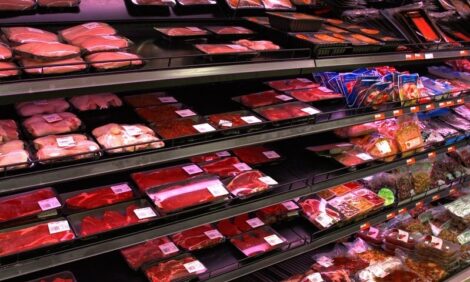
Weekly protein report: Record beef demand signals structural shift in consumer preference
US beef demand has reached its strongest level in four decades, with consumers choosing beef despite higher prices
 10 April 2026
 17 minute read
 By:
By: Greer signals Canada’s protected dairy sector will face renewed US pressure as trade talks advance
Jamieson Greer addressed dairy only briefly in his remarks Tuesday at the Hudson Institute (link to special report), but the context is important — it came during a discussion of the upcoming USMCA review and how trade tensions differ between Canada and Mexico.
Dairy framed as a Canada-specific trade friction. Greer acknowledged that dairy is a disproportionately important issue in US–Canada trade, far more than in US/Mexico relations. When prompted, he agreed directly: Dairy is “a much bigger issue” with Canada than Mexico.
Why dairy matters in the USMCA review. His broader point was that each North American partner presents distinct trade challenges, which is why the administration is considering separate bilateral protocols layered onto USMCA rather than a one-size-fits-all renegotiation.
Canada: Dairy access and supply management remain core disputes
Mexico: Issues center more on autos, labor and broader trade flows
Greer tied this into President Donald Trump’s dissatisfaction with USMCA outcomes, noting that sector-specific imbalances — like Canada’s protected dairy market — complicate claims that the agreement is functioning as intended.
Bottom Line: Greer did not announce new dairy policy, but his comments signal:
- Dairy will be a central pressure point in US/Canada negotiations
- The administration is likely to pursue targeted fixes, not broad renewal
- Expect continued US pressure on Canada’s supply management system during the USMCA review process
Beef demand surges to 40-year high as consumer preference drives market strength
NCBA’s Colin Woodall highlights resilient beef demand, screwworm preparedness, and policy priorities ahead of midterm engagement
Consumer demand for beef has reached its strongest level in four decades, according to comments from Colin Woodall, CEO of the National Cattlemen’s Beef Association, in an interview with farm broadcaster Ron Hays on Beef Buzz. Woodall emphasized that sustained, long-term investment in beef quality and marketing has resulted in consumers consistently choosing beef over competing proteins — even at elevated prices — underpinning the current strength in cattle markets.
Demand driving the market. Woodall attributed today’s strong cattle prices almost entirely to consumer preference, noting demand is now at a 40-year high. He stressed that unlike necessity-driven purchases, beef consumption is a deliberate choice by consumers despite higher retail costs. That distinction — “they don’t have to buy beef, they want to” — reflects both improved product quality and decades of industry investment. According to Woodall, the US is producing the highest-quality beef in its history, reinforcing consumer loyalty and willingness to pay.
Staying ahead of New World screwworm. Meanwhile, the industry is closely monitoring the potential threat of New World screwworm, with preparedness efforts focused on early detection and education. Woodall emphasized that the pest’s rapid lifecycle makes vigilance critical, as infestations can develop quickly between routine herd checks. While treatment options exist, he underscored that timely identification of larvae and wounds is essential to limiting spread and minimizing impact.
Dietary guidelines and beef’s role. Woodall also pointed to recent federal dietary guidance as a positive development for the industry, noting that beef continues to be recognized as a valuable protein source.
He credited decades of scientific research — spanning roughly 40 years — for shaping that outcome, reinforcing beef’s role in a balanced diet and strengthening the industry’s position in ongoing nutrition debates.
JBS beef plant strikers in Greeley, Co. return to work
Workers at the world's largest meat company, JBS, agreed to return to work at the firm’s beef plant in Greeley, Colorado after it agreed to resume negotiations with labor, bringing a three-week work stoppage to an end, their union said in a statement on Saturday and as reported by Reuters. The union representing about 3,800 plant workers said the new round of talks would resume on April 9 and 10 after last month's strike, to press for wages that reflect inflation and a halt to company charges for replacing protective equipment.
"Workers remain united and will continue to fight until JBS fully ends its unfair labor practices," said Kim Cordova, president of the local union representing the Greeley workers. It is calling for a contract offer that protects workers, shows them the respect they deserve and pays them a livable wage, he added in a statement. There had been no new deal or change to the original offer, a JBS spokesperson told Reuters.
Global food prices climb to six-month high as energy shock ripples through agriculture
Broad-based gains across oils, sugar, grains and meat highlight tightening supply dynamics and biofuel linkages
The Food and Agriculture Organization (FAO) Food Price Index rose for a second consecutive month in March 2026, reaching 128.5 points — its highest level since September — as higher energy prices tied to the Middle East conflict continued to ripple across global agricultural markets. The increase was broad-based, with every major commodity category posting gains, underscoring both tightening fundamentals and the growing influence of energy-agriculture linkages.
Vegetable oils lead the surge. Vegetable oil prices jumped 5.1% in March, climbing to their highest level since June 2022. The rally was driven by simultaneous strength across palm, soybean, sunflower and rapeseed oils — a rare alignment that signals constrained global supply alongside strong demand. Weather concerns, trade disruptions and elevated input costs are all contributing factors.
Sugar spikes on ethanol economics. Sugar prices surged 7.2%, one of the sharpest increases among major commodities. The move is closely tied to rising crude oil prices, which are incentivizing Brazil — the world’s top exporter — to divert more sugarcane toward ethanol production rather than refined sugar. This biofuel-driven shift is tightening global sugar supply expectations ahead of the new harvest.
Cereals extend gains amid tightening balances. Cereal prices rose 1.5%, reaching their highest level since April 2025. Gains were recorded across all major grains except rice, reflecting ongoing concerns about global supply availability, logistics disruptions and higher production costs. The trend reinforces a tightening balance sheet environment for key staples like corn and wheat.
Dairy and meat prices rebound. Dairy prices increased 1.2% — the first rise since July 2025 — led by stronger quotations for skim milk powder, butter and whole milk powder. Meanwhile, meat prices rose 1%, primarily driven by higher pork prices, signaling firm demand and tightening protein supplies in key markets.
US meat exports show mixed February performance — pork gains, beef pressured by China lockout
Strong per-head values and surging variety meat exports help offset broader beef export declines
February trade data from USDA and the US Meat Export Federation (link) show a mixed but resilient picture for US red meat exports, with pork posting modest growth, beef facing headwinds tied to China, and variety meats delivering standout gains.
Pork exports reached 242,511 metric tons, up 1% year-over-year, with value also rising 1% to $678.8 million. Growth was driven by strong demand in Mexico, a rebound in Japan and increased shipments to South Korea, Central America, the Dominican Republic and Taiwan. For the first two months of 2026, pork exports are running 2% ahead of last year in both volume and value, slightly exceeding the record pace set in 2024.
Beef exports, meanwhile, declined sharply, falling 13% in volume and 10% in value to $722.7 million in February — largely due to continued lack of access to China. Shipments also trended lower to key markets like Japan, South Korea and Canada. However, excluding China, beef export performance was notably stronger, with value up 4% and volume nearly steady. Gains were recorded in Mexico, Taiwan, the Caribbean and South America.
A major bright spot for the beef sector remains variety meats. February exports of beef variety meat rose 12% in volume and surged 40% in value to $106 million, underscoring strong global demand. Year-to-date, variety meat exports are up 9% in volume and 43% in value — reinforcing their critical role in maximizing carcass value.
Overall, per-head export values remained robust, with pork exceeding $67 per head and beef nearing $423 per head of fed slaughter, highlighting continued profitability despite trade disruptions.
Lamb exports also showed momentum. February shipments of lamb muscle cuts climbed 52% year-over-year to their highest level since May, with value up 31%. Growth was concentrated in the Caribbean and Central America, contributing to a 20% increase in volume and 13% rise in value for January–February.
The data underscores a key theme: while geopolitical barriers — particularly in China — continue to weigh on US beef exports, strong demand in alternative markets and the outsized contribution of variety meats are helping stabilize overall export value.
China’s pork glut deepens as industrial expansion outpaces demand
Prices hit multi-year — and in some cases multi-decade — lows as Beijing moves to rein in output
China’s pork market is under mounting pressure as a prolonged supply glut pushes prices to their lowest levels in years, underscoring structural imbalances in the world’s largest pork industry. Recent market data show live hog prices have fallen into a rough $1.45–$1.75 per kilogram range, with some reports indicating prices briefly dipping below $1.45/kg in March — the lowest levels in more than a decade and, in some regions, approaching 15–16-year lows.
Pork prices have followed the same trajectory, reflecting weak post-holiday demand, elevated cold storage inventories and persistent oversupply across the sector. The downturn has intensified into early 2026 despite a temporary Lunar New Year demand bump, reinforcing that the imbalance is structural rather than seasonal.
Meanwhile, producer margins have collapsed. Analysts estimate many farmers are now losing roughly $40–$50 per head, as falling hog prices collide with sharply rising feed costs driven by the global energy and grain rally tied to the Iran conflict.
The severity of the downturn has prompted Beijing to step in more aggressively. Authorities have urged producers to cut herd sizes, cap production, and tighten capacity controls, while also signaling potential intervention through state pork reserves to stabilize prices.
Producers are also being squeezed from both sides. While revenues fall due to weak prices, input costs are rising amid global disruptions tied to the ongoing Middle East conflict, which has lifted energy, grain and feed costs. The mismatch between high production levels and softer consumption has left many farmers operating under significant financial strain.
Beyond economics, concerns are emerging about the long-term structure of the industry. Analysts note that the shift toward industrial-scale farming may be impacting meat quality and market balance, raising questions about sustainability as China navigates the consequences of rapid consolidation in its pork sector.
USDA Canada livestock and products semiannual report
The Canadian cattle herd has entered the consolidation phase. Heifer retention practices in 2025 and a slight increase to the breeding herd to begin 2026 will support a larger 2026 calf crop. Consequently, slaughter and beef production are forecast to see growth in 2026. Heifer retention and reduced cow culls will continue in 2026 in efforts towards a herd rebuild. Increased beef production and market access opportunities will see Canadian beef exports grow in 2026. The Canadian swine herd is also forecast to remain relatively stable in 2026. Slaughter is forecast to see slight growth with a slightly larger pig crop and more processing capacity utilization. Pork exports will continue to remain strong on sustained global demand.
Cattle
A larger breeding herd will see a year-over-year increase in the calf crop for 2026. Improved pasture conditions in several regions in 2025 have supported reduced cow slaughter and increased heifer retention. The Canadian herd has entered the consolidation phase and is primed to begin a slow rebuild.
Trade:
Live cattle imports in 2025 were at a record level. While live imports are forecast to decline in 2026, they will remain robust. Western Canada continues to have available feedlot pen space. A larger 2026 calf crop will see more domestic availability of feeder cattle. Fed exports will remain strong in 2026 given tight US supplies.
Beef Production:
Beef production will see growth in 2026 with heavier carcass weights and slightly higher slaughter numbers. Heavier weights have supported beef production amid tighter cattle supplies.
Trade:
Imports are forecast to see continued growth in 2026. High domestic and US beef prices will support growth in imports from lower cost of production regions. Exports are forecast to grow in 2026. Canadian beef has regained access to the Chinese market and has achieved additional market access in Indonesia.
Swine Production
Stability is forecast for the swine herd as producers seek to weather market volatility. Improved sow productivity sees a larger 2026 pig crop forecast and increased processing capacity utilization will support larger slaughter numbers.
Trade: Producers will be watching closely for impacts to live exports from the full implementation of “Product of USA”. Live exports are forecast up two percent with market hog exports forecast lower while feeder pig exports will be supported by strong US pricing.
Pork Production
Pork production is forecast to see one percent growth in 2026, on higher slaughter volumes.
Trade: Pork exports are forecast to see two percent growth in 2026. Export gains will be likely in the Indo Pacific while exports to the United States are forecast to fall.
USDA Secretary signals USDA preparing for phased reopening of US/Mexico cattle border
A decision timeline pointing toward late April, though no formal announcement date has been set.
Phased reopening centered on limited, low-risk ports. Rollins made clear that any restart would be incremental rather than a full reopening, emphasizing a risk-based strategy that limits initial entry points. USDA is expected to begin with one or two ports, with strong indications that Arizona crossings — such as Douglas/Agua Prieta — are leading candidates due to their geographic distance from current disease threats.
That approach would funnel early cattle flows through select western hubs, aligning with past USDA reopening playbooks that prioritize containment and monitoring capacity.
Timing points to late April decision window. Rollins has said USDA expects to make an announcement within “two to four weeks,” with additional remarks suggesting a decision could come within about a month.
That places the likely timeline in late April, although she has not explicitly tied the announcement to any upcoming trip to Mexico.
Biosecurity vs. supply pressures shaping policy. The reopening debate is being driven by two competing dynamics:
- Biosecurity risk remains the primary constraint: The spread of New World screwworm continues to be closely monitored, with cases reported roughly 200 miles south of the US border and moving north. USDA has ramped up mitigation efforts, including surveillance and investments in sterile fly control programs, to prevent incursion.
- Market pressures are intensifying: Tight US feeder cattle supplies and operational strain on Southwest feedyards are increasing pressure on USDA to restore imports from Mexico, a key supply source for the region.
- Analysis shows that US beef retail prices will not come down later this year unless portions of Mexican cattle are allowed access into the United States. Depending on the timing and number of Mexican cattle, some analysis shows an impact on retail beef prices of 7% to 10%.
- Meat price impacts. The situation also reflects the continued tight US cattle supply and the lack of cattle coming in from Mexico has exacerbated that situation. Price relief for consumers is likely months away. USDA’s most recent Food Price Outlook forecast beef and veal prices would rise 10.1% in 2026 from 2025 levels, edging past the Covid-linked increases of 9.3% in 2021 and 9.6% in 2020. That would be the steepest rise since prices increased 12.1% in 2014 and something the White House wants to avoid going into midterm elections.
Structure of the reopening plan. Based on Rollins’ remarks and USDA discussions, the emerging framework includes:
- Phased implementation, rather than a full reopening
- Limited initial ports, likely concentrated in Arizona
- Geographic risk targeting, prioritizing areas farthest from screwworm activity
- Strict animal health benchmarks, requiring Mexico to meet USDA import protocols
Bottom Line: USDA is moving toward a controlled, regionally targeted reopening of the cattle border, balancing disease containment priorities with mounting supply chain pressure in the US cattle market. Arizona is positioned to serve as the initial gateway, with expansion dependent on how effectively biosecurity risks — particularly screwworm — are contained in the weeks ahead.
Weekly USDA dairy report
CME GROUP CASH MARKETS (4/3) BUTTER: Grade AA closed at $1.7900. The weekly average for Grade AA is $1.7856 (-0.0299). CHEESE: Barrels closed at $1.5925 and 40# blocks at $1.6725. The weekly average for barrels is $1.5856 (+0.0146) and blocks $1.6306 (+0.0001). NONFAT DRY MILK: Grade A closed at $1.9725. The weekly average for Grade A is $1.9450 (+0.0310). DRY WHEY: Extra grade dry whey closed at $0.6875. The weekly average for dry whey is $0.6888 (+0.0128).
BUTTER HIGHLIGHTS: Stakeholders in the East and Central regions report strong retail demand. Stakeholders in the West region report retail demand varies from steady to strong. Demand from the food service sector varies from lighter to steady throughout the country. Demand from international buyers varies from steady to strong. Cream availability for butter producers is tighter with more cream going to Class II and III manufacturing. Cream demand from butter manufacturers varies from light to steady. Butter production is generally active seven days a week, but some manufacturers are not pushing churns to full capacity with the holiday weekend ahead. Bulk butter overages range from 2 cents below to 8 cents above market across all regions.
CHEESE HIGHLIGHTS: Cheese production in the Northeast is slower as plants prepare for spring holiday downtime and divert milk to balancing and powder operations. Demand for cheddar and other domestic styles is strong, and although inventories are higher, production is not exceeding sales. Central region milk output is strong, creating ample Class III spot milk supplies with offers from $7 under to $2 under. Cheese production is steady to lighter, with softer barrel and curd demand, though curd interest is expected to improve. In the West, strong milk output meets plant needs. Cheese production is steady, spot cheese is limited and manufacturers plan to prioritize contracts through Q2. Domestic demand is steady with strong mozzarella export interest.
FLUID MILK HIGHLIGHTS: Milk production in the United States is steady to stronger. Some areas are in spring flush and providing ample volumes of milk. Milk components are down, but remain higher than this time last year. Class I production is slow this week. Between the upcoming spring holiday and spring break for some educational institutions, demand for Class I is light. Class II demand is steady to strong. Some facilities experienced a surge of production at the beginning of the week, but tapered as the week progressed. Class II spot cream demand is steady to strong. Class III production is steady to light. Many facilities are planning downtime at the end of the week, creating an availability of milk on the spot market. Class III spot milk prices ranged from $7-under to $2-under. Class IV demand is steady to strong. Powder demand remains very strong, and production is struggling to keep up with demand. Class IV spot demand for cream is low this week as contractual volumes are reported as sufficient. Condensed skim volumes are increasing. Spot purchases of condensed skim range from flat to $0.30 over Class price. Cream multiples for all Classes range:1.15 – 1.42 in the East; 1.10 – 1.30 in the Midwest; 1.06 – 1.28 in the West.
DRY PRODUCTS HIGHLIGHTS: Nonfat dry milk (NDM) prices posted strong gains across all regions this week, with the largest increases at the bottom of the high heat range in all regions and at the bottom of the mostly range for low/medium heat in the West. Tight inventories and difficulty securing spot loads of NDM keep markets bullish and demand mostly steady. Dry buttermilk prices rose across all regions, particularly at the top of the ranges in all regions. Dry whey markets were mixed: the Central region saw a higher bottom and slightly lower top of the range, leaving the mostly series steady at the bottom but softer at the top; the West recorded increases across its entire series; and the East held steady at the low end but eased at the top. Lactose prices advanced across the full range, with steady mostly values amid tight inventories and firm demand. Whey protein concentrate 34% slipped at the bottom of the range while holding steady elsewhere. Dry whole milk prices strengthened at the high end of the range while remaining steady at the low end. Acid casein increased at the top of the range while holding steady at the bottom, and rennet casein prices were unchanged this week.
ORGANIC DAIRY MARKET NEWS: The recently released Pennsylvania Monthly Organic Dairy Report and Vermont Monthly Organic Dairy Report for covering January 2026 both showed the weighted average price for fluid milk increased. Federal Milk Market Order 1 reported utilization of organic whole milk and organic reduced fat milk were both up in February from the previous year. Monthly export data released by FAS showed exports of organic milk categorized as HS-10 code 0401201000. Organic milk exports were from the month prior, but down from the start of the year through February, compared to the same period last year. European organic milk average pay prices for January 2026 increased in France, but decreased in Austria, Germany and Bavaria compared to December.