Canada cattle herd enters consolidation phase in 2026
Heifer retention rises as rebuild outlook improves
 20 April 2026
 3 minute read
 By:
By: The USDA's Foreign Agricultural Service post in Canada forecasts that the cattle herd will be in the consolidation phase in 2026, with signs of consolidation initiating in 2025, according to its most recent livestock report. Statistics Canada reported a 2% year-over-year growth in heifer retention intentions for beef replacement in the July 1 inventory report. Increased heifer retention was also indicated in the January 1 inventory report.
Contacts report that improved pasture conditions and feed outlook are seeing cow-calf producers start to begin herd rebuilding. However, pasture conditions are highly variable across the country as drought continues to persist in several regions. As a result, and given strong pricing incentives for aging producers to consider selling stock if there is no succession plan, FAS/Ottawa is forecasting that 2026 will largely be a stabilising year for the Canadian herd. If pasture and feed conditions continue to improve, consolidation will move into a more meaningful rebuild of the breeding herd over the next few years.
In line with signals of consolidation, FAS/Canada forecasts that beef cow beginning stocks in 2026 will be up slightly by 23,000 head as a result of reduced cow slaughter and increased heifer retention in 2025.
Reductions in cow slaughter in 2025 will carry over into 2026 as producers retain more animals amidst improved pasture and feed conditions. Profitability in the cow-calf sector with strong pricing in 2025 will also support producers seeking to stabilize their breeding herds with a further outlook to growth from 2026 onwards. However, the weather in 2026 will remain an important factor in breeding herd rebuild.
For 2025, while the overall national herd appears to be entering the consolidation phase, there is a patchwork across the country with drier areas still reportedly seeing some herd liquidations while areas with better pasture conditions have begun to rebuild. Parts of Western Canada have seen timely summer moisture creating optimism for ranchers in those regions; however, drought conditions remain in large swaths of Saskatchewan and Manitoba. Parts of British Columbia, especially the interior, continue to see dry conditions along with southeastern Ontario and much of the Maritime Provinces.
Overall, a reduction in cow slaughter to cow inventory will support a slight bump in breeding stock numbers in 2026. This pattern will continue through 2026, barring any significant drought events. Along with reductions in cow slaughter, heifer slaughter will also be reduced in 2026, a consequence of increased heifer retention.
Heifer retention struggled in 2024 as a result of poor pasture conditions and feed outlook. As mentioned, while conditions are highly variable by region, there is reportedly significant enough improvement in pasture conditions in enough regions of cow-calf production to see growth in heifer retention in 2025.
Assuming pasture conditions continue to improve, 2026 will once again support increased heifer retention as producers seek to rebuild herds.
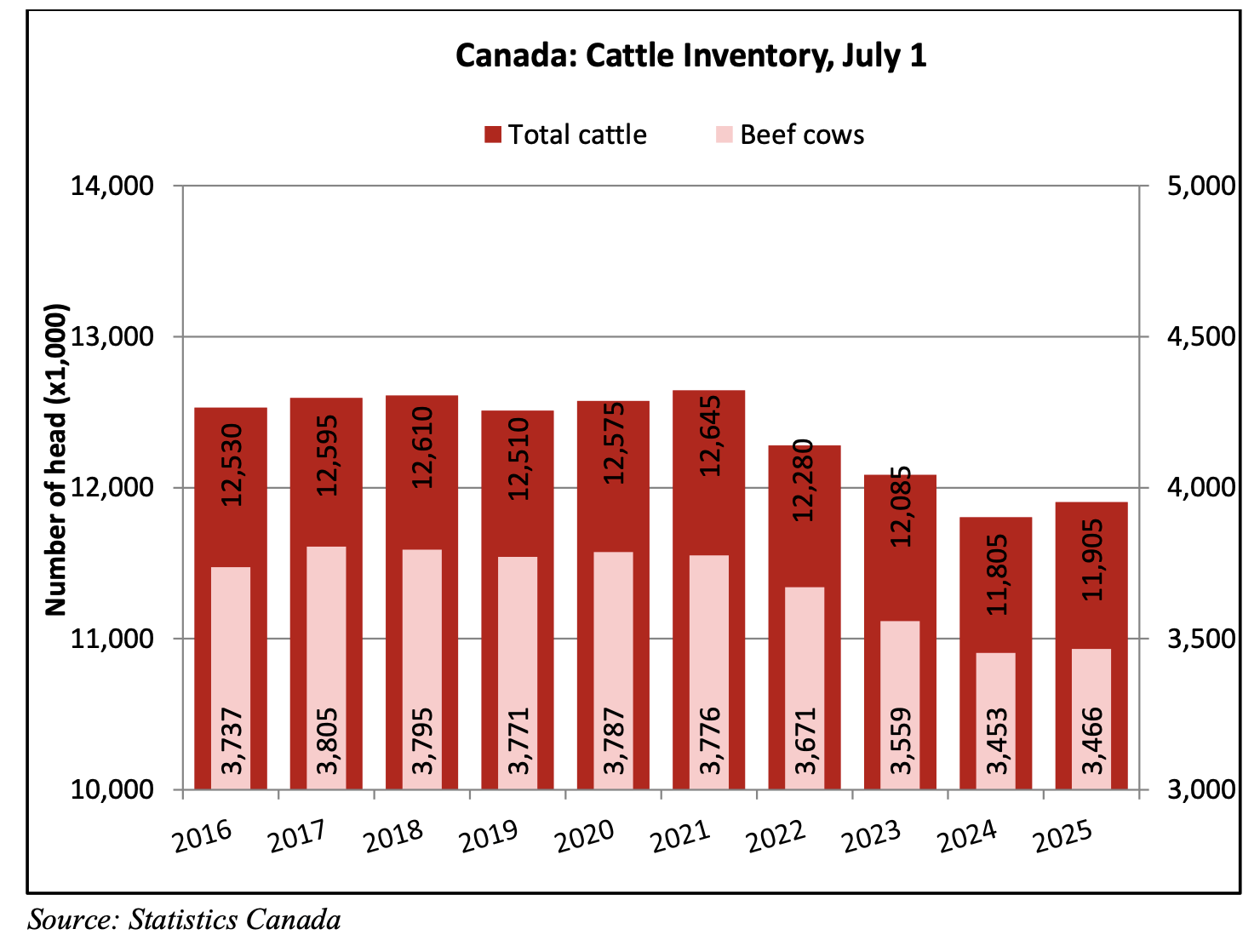
FAS/Ottawa is forecasting slight growth in the 2026 calf crop, on a slightly larger breeding herd in 2025. Despite a reduction in breeding stock reported in the January 1, 2025 inventory report, first half calf crop production was reported as 2% higher year-over-year by Statistics Canada. Herd liquidation and aggressive culling practices during drought years is likely supporting this improved fertility as cows found open (not in calf) during pregnancy checks and problematic stock would have been prime candidates for culling as producers looked to retain only proven cows. Improved feed conditions in 2025 should support strong fertility rates continuing into 2026.
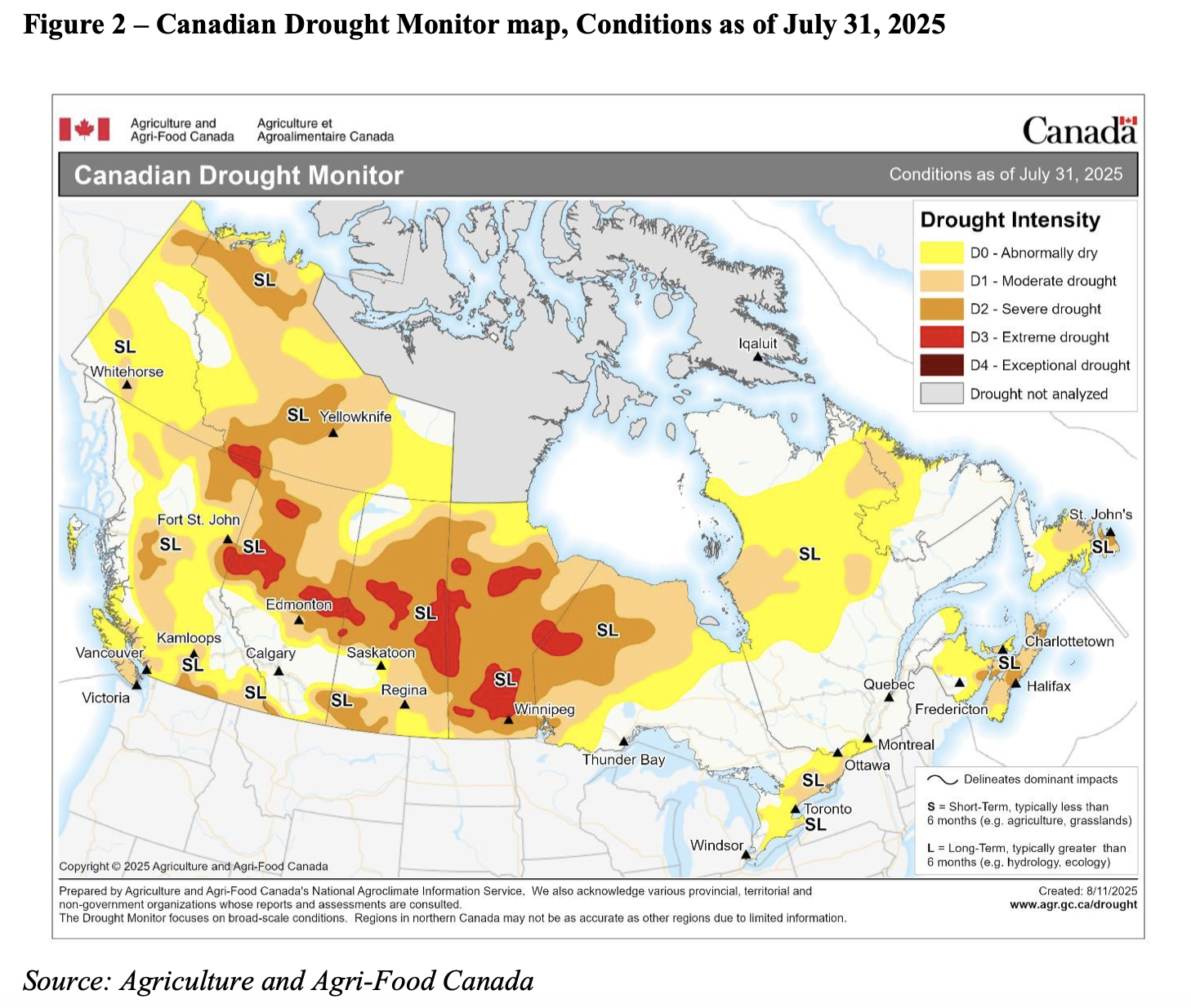
For 2025, FAS/Ottawa has revised cow slaughter down slightly on March estimates given year-to-date federal slaughter data and reports of increased retention. Despite Statistics Canada amending the beginning inventories of beef cattle downwards, FAS/Ottawa is maintaining the original calf crop estimate based off of first half calf crop initial data and reports of improved fertility. Statistics Canada also amended beginning total cattle inventories downwards by 40,000 head on a lowered calf crop from 2024 and reduced beef cow stocks.